
Speaking16 min read
Why Public Speaking Is Important for Kids
Why is public speaking important for kids? See the benefits, the right age to start, age-appropriate skills, and why communication matters in the AI era.
3 Oct 2026By Priya
Tiny Steps Parent Desk
Start with your child's exact reading, grammar, writing, or speaking blocker. Search the library only when you need to go deeper.
Need structured support?
Move from reading the answer to choosing the next step.
Start with the problem
Reading is stuck
Check whether the gap is letter sounds, blending, or decoding.
Read guide →Sounds are known
Move from isolated sounds to smooth blending and unfamiliar-word reading.
Read guide →Starting phonics
Use readiness signs instead of relying on a birthday alone.
Read guide →Grammar & writing
Find practical sentence-formation and grammar-application support.
Read guide →Speaking confidence
Understand hesitation and build low-pressure speaking confidence.
Read guide →Featured guides
Clear starting points for common questions about phonics, reading, and communication, with practical next steps for families.

What is SATPIN phonics? Learn the SATPIN order, sounds, words, blending, early sentences and what comes next, with practical examples for parents.
Phonics for parents: learn how phonics works, how to support blending, decoding, spelling and reading at home, and what progress to watch for.
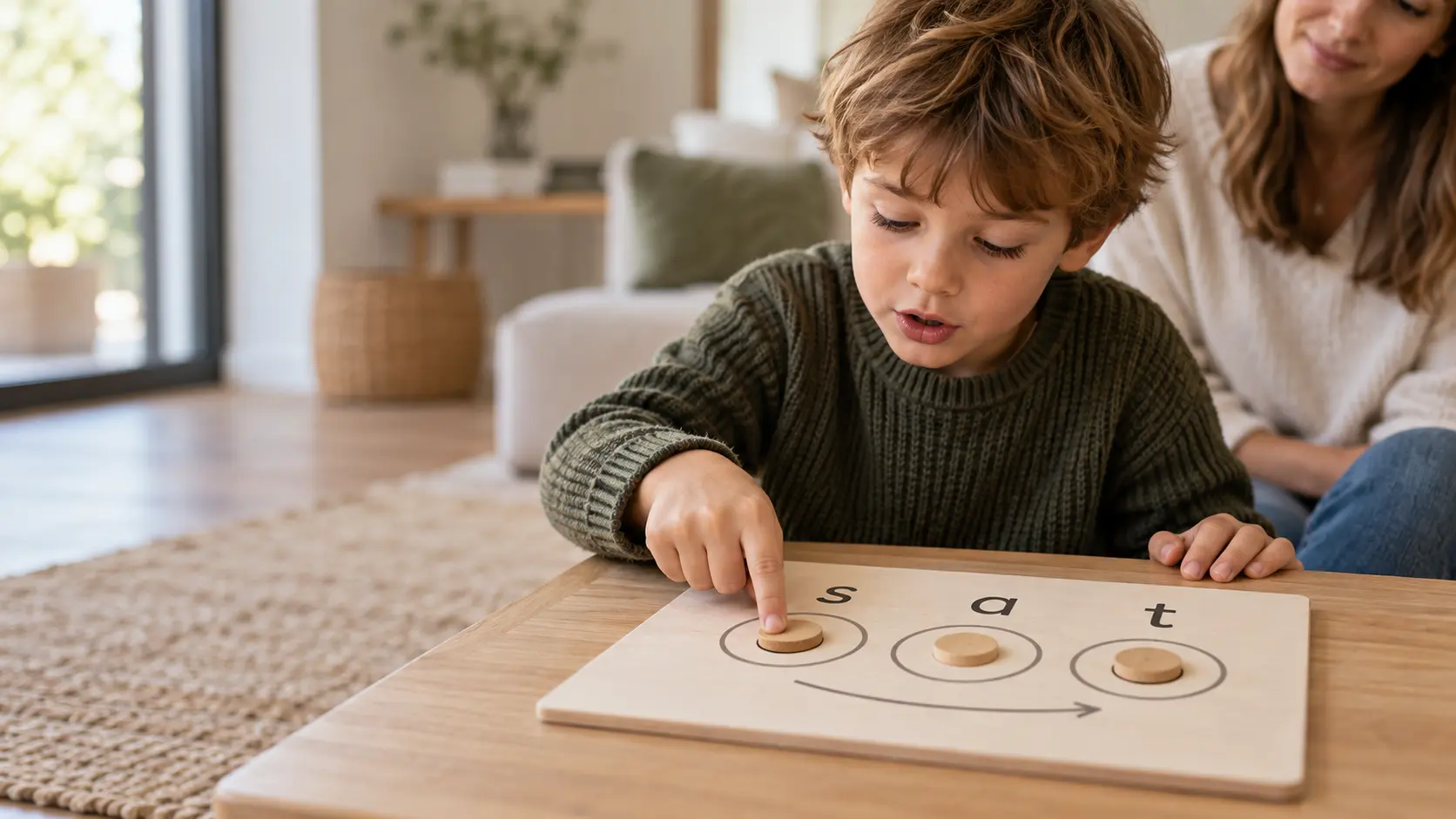
Child knows letter sounds but cannot blend or read words? Check sound recall, oral blending, CVC decoding and fresh-word transfer to find the real gap.

Child gives one-word answers? Identify the cause, expand responses with fading prompts, support multilingual children, and know when extra help may be useful.
Filter by topic
Library
71 more articles
Why is public speaking important for kids? See the benefits, the right age to start, age-appropriate skills, and why communication matters in the AI era.

Help kids build conversation skills through listening, turn-taking, fuller responses, follow-up questions, staying on topic and communication repair.
Teach storytelling to kids through clear sequence, relevant details, retelling, story creation, listener awareness, oral rehearsal and gradual independence.
Help kids improve public speaking delivery with useful pace, audible volume, pauses, emphasis, clarity, posture, audience awareness and focused rehearsal.

Learn how children move from sounding out unfamiliar words to recognising familiar words quickly, how orthographic mapping fits, and why this is not visual guessing.

Teach paragraph writing to kids with one main idea, relevant details, logical order, cohesion, rereading and revision—without forcing a fixed five-sentence formula.
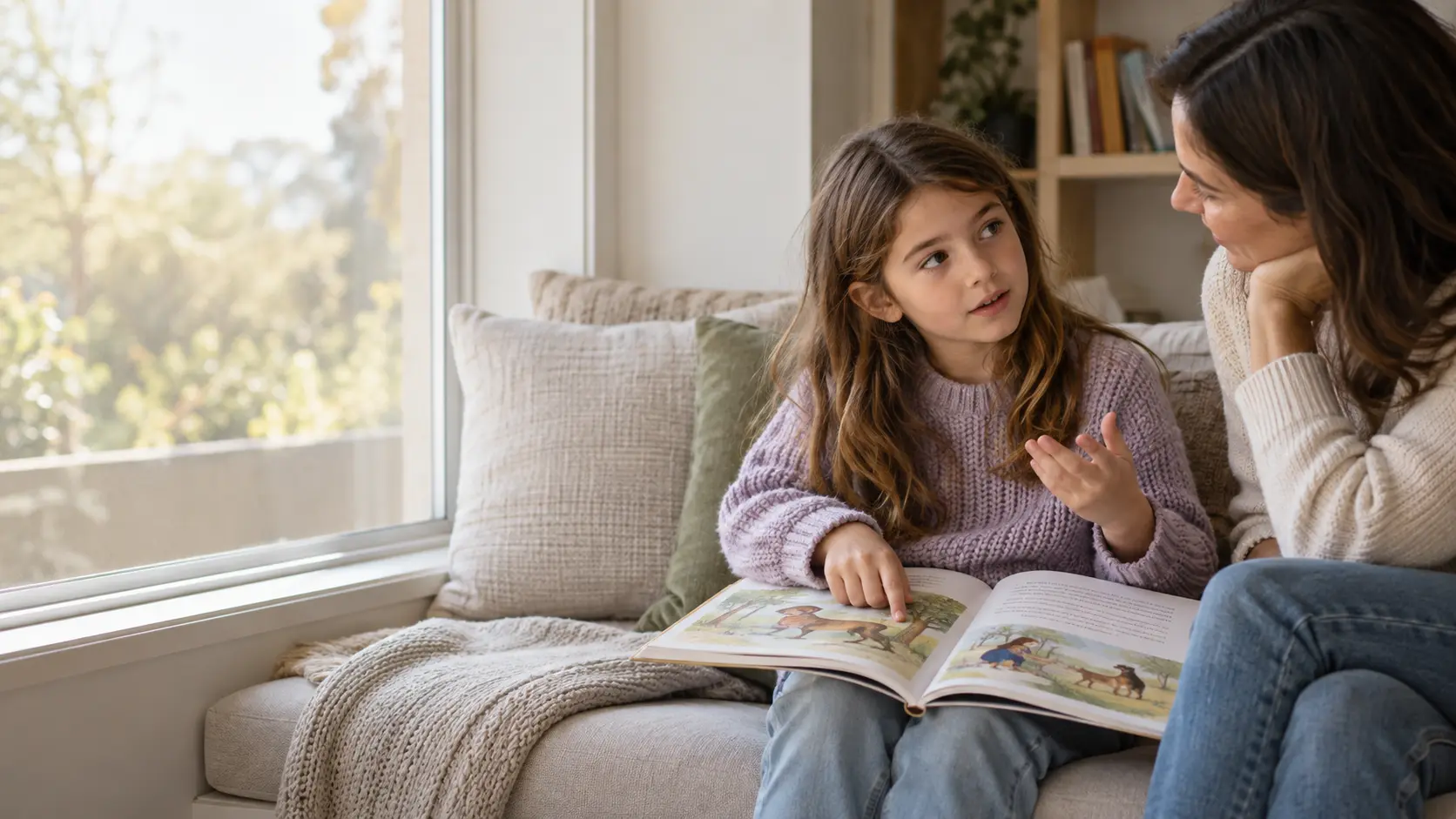
Learn how vocabulary supports reading comprehension, why decoding a word is not the same as knowing its meaning, and what parents can do when words block understanding.

Phonological awareness, phonemic awareness and phonics explained for parents: what happens with spoken sounds, where print enters, and what to practise next.

Teach punctuation and capital letters to kids through sentence meaning: capitals, full stops, question marks, exclamation marks, commas, editing and transfer.
Parents also ask
Start with the guide that matches the exact blocker: ABC knowledge without reading, letter sounds without blending, or the broader phonics parent guide if you are not sure where the gap sits.
Yes. The Parent library includes phonics, grammar, speaking, English communication, and practical parent guidance. School leaders can switch to the Schools & Research filter.
No. The guidance is written for families globally, while many examples are also useful for multilingual homes and English-medium school contexts in India.
Use the search box with the words you would naturally use as a parent, choose the most relevant topic, and load more articles only when you want to go deeper.

Founder, Tiny Steps Learning
Priya leads Tiny Steps academic direction across curriculum, lesson design, teacher guidance, teaching quality, and parent communication.
Inbox guidance
Parent-friendly notes on phonics, reading, grammar, speaking, home routines, and new Tiny Steps guidance.