1. Quick Answer for Parents
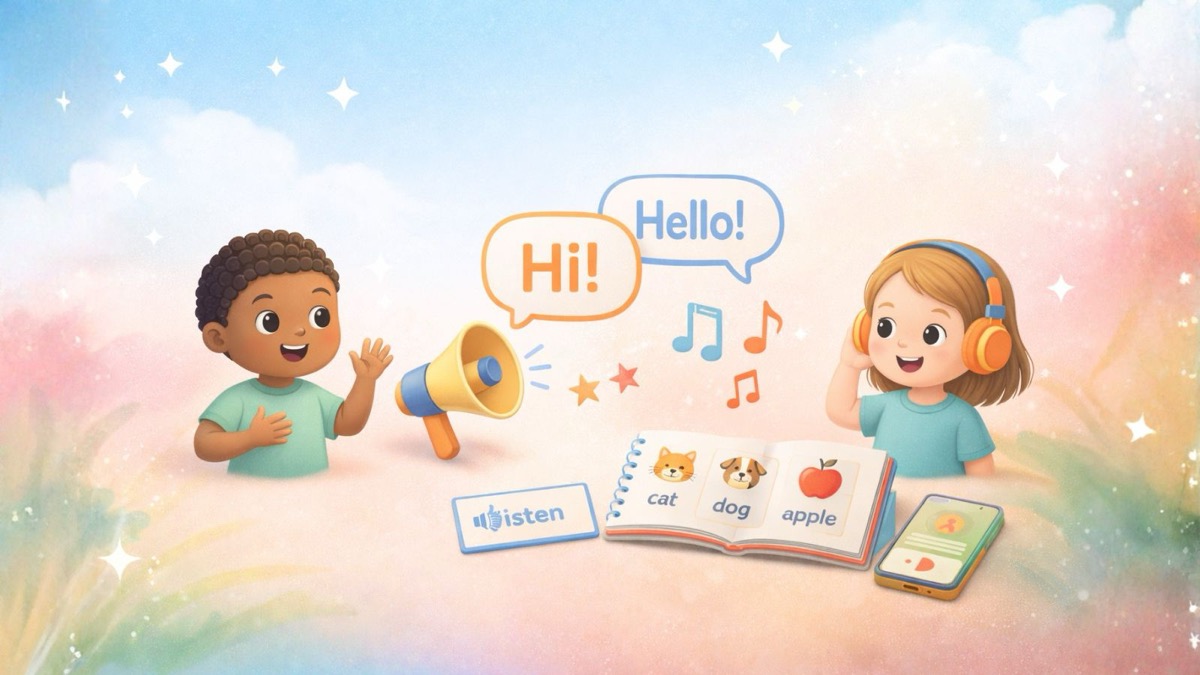
Phonics, grammar, and speaking should not be treated as separate skills. Phonics helps children read words, grammar helps them build correct sentences, and speaking helps them use those sentences confidently. When these three skills are taught together, children move from reading words to forming sentences and finally expressing ideas clearly.
2. Parents Often Search: How to Improve Child English Communication
- How to improve child English communication
- Phonics grammar speaking classes for kids
- English communication classes for children
- How phonics helps speaking
- Grammar and speaking classes for kids
- Complete English program for kids
3. The Common Problem: Children Learn Skills Separately
- Some children can read words but cannot speak in full sentences.
- Some know grammar rules but still make mistakes while speaking.
- Some speak casually but struggle with reading and sentence structure.
- Strong English communication needs all skills connected.
4. The English Communication Triangle
| Skill | What It Builds + Without It |
|---|---|
| Phonics | Builds reading and decoding + Without it, child guesses words |
| Grammar | Builds sentence accuracy + Without it, child speaks or writes broken sentences |
| Speaking | Builds confidence and expression + Without it, child knows answers but cannot express them |
5. How Phonics Supports Communication
- Phonics gives sound awareness.
- Children decode unfamiliar words.
- Reading becomes less dependent on memorisation.
- Better reading improves vocabulary exposure.
- Clear sound practice supports pronunciation.
Example: Child reads ship, shop, shell. Then speaks: I saw a big ship.
6. How Grammar Supports Communication
- Grammar gives sentence structure.
- Children learn word order.
- They move from words to meaningful sentences.
- Writing and speaking become clearer.
Example: Words: dog / garden / running. Grammar sentence: The dog is running in the garden.
7. How Speaking Connects Everything
- Speaking turns learning into real communication.
- Children use vocabulary, grammar, pronunciation, and confidence together.
- Speaking activities show whether the child can apply each concept.
Example activity: Read the word rain. Make a sentence: It is raining today. Speak: I like rainy days because I can use my umbrella.
8. The Tiny Steps Method: Read It, Build It, Say It
| Step | Child Does + Skill |
|---|---|
| Read It | Reads word or sentence + Phonics and reading |
Read It: Child reads a word or sentence. Skill: phonics and reading.
| Build It | Creates a sentence + Grammar |
|---|
Build It: Child creates a sentence. Skill: grammar and sentence formation.
| Say It | Speaks using expression + Communication |
|---|
Say It: Child speaks using expression. Skill: communication and confidence.
9. Age-Wise Learning Path
Ages 3-5
- Letter sounds
- Picture talk
- Simple words
- Oral sentences
Ages 5-7
- Blending
- CVC words
- Simple grammar
- Short speaking tasks
Ages 7-10
- Reading fluency
- Sentence formation
- Grammar accuracy
- Storytelling
Ages 10-12
- Paragraph writing
- Structured speaking
- Presentations
- Confident communication
10. When Parents Should Choose an Integrated English Program
- Child reads but does not understand.
- Child speaks but uses incomplete sentences.
- Child knows grammar but cannot apply it.
- Child is shy in class.
- Child avoids reading aloud.
- Child needs overall English confidence.
11. Tiny Steps View
At Tiny Steps, English is taught as a connected skill. Children do not only memorise sounds or grammar rules. They practise reading, sentence formation, grammar usage, and communication together so they can use English confidently in school and daily life.
- Explore phonics pathway: /phonics
- Explore grammar pathway: /grammar
- Explore speaking pathway: /speaking
- See curriculum roadmap: /curriculum
- Compare full programs: /courses
- Why parents choose Tiny Steps: /why-tiny-steps
- Parent guidance hub: /parents
- Contact Tiny Steps: /contact